Wood Fence Installation: How to Prevent Fence Leaning
Do you want your new fence to stay straight and strong for years, not just survive its first summer? At Sims Fence Company, providing services in Thomasville, GA, we know that wood fence installation presents unique challenges in our area. Even a seemingly sturdy fence can turn unsightly and unstable, thanks to the region’s stubborn red clay. Leaning and rotting posts are a common problem, but with expert wood fence installation methods, you can prevent these issues and enjoy a beautiful, lasting boundary around your property.
Why Wood Fence Installation Fails: The Red Clay Challenge
If you’ve noticed fences tilting in the neighborhood, you’re not alone. Many residents deal with fences leaning, sagging, or collapsing within just a few years. The prime suspect? Our famously rich Georgia red clay. While visually striking, this heavy clay creates a set of problems for any wood fencing installation.
Georgia red clay has a dense, compact structure that holds water. While this might sound harmless, it actually causes multiple headaches for wood fence installation. In wet seasons, the clay expands as it absorbs rain, shifting the soil and the posts set within it. When dry weather comes, the clay contracts, leaving gaps around posts. Over time, these cycles can cause posts to loosen and lean. Because wood fencing installation depends on stable, well-set posts, ignoring soil conditions almost guarantees future fence problems.
How Deep Should Fence Posts Be in Georgia Red Clay?
One of the most frequent questions we hear is, “How deep do fence posts need to be for a secure wood fence installation in red clay?” Our answer relies on the ‘One-Third Rule,’ an essential guideline for any wood fencing installation. This rule means that for every post, one-third of its total length must be underground. For example, if your fence is six feet tall, each post should be buried at least two feet deep.
Unlike softer soils where shallower depths might work, red clay calls for even more care. Our experience shows that following this rule produces wood fence installation results that resist movement through all weather. By making sure every fence post is deep enough, we minimize shifting from ground expansion and contraction.
But it’s not only about depth. At Sims Fence Company, we always add a drainage aggregate, typically a four- to six-inch layer of gravel, at the bottom of every post hole. This step allows water to escape, reducing rot—one of the biggest threats to any wood fencing installation. Without proper drainage, posts quickly weaken and fail.
Setting Fence Posts: Dry-Pack vs. Wet-Mix Concrete
The way you set posts during a wood fence installation makes a significant difference in strength and durability. Some installers mix concrete with water before pouring (wet-mix); others use dry concrete and add water afterward (dry-pack). Which approach performs best for wood fencing installation in Georgia’s red clay?
We often recommend the dry-pack technique. After positioning the post and backfilling with gravel, we pour in dry concrete and sprinkle water on top. Why? Wet-mix concrete may trap water next to the post since red clay retains moisture, increasing the risk of rot for wood fence installation. In contrast, dry-pack concrete lets moisture escape and creates a solid footing that resists soil movement.
On rare occasions, such as urgent repairs or extremely cold weather, wet mix can be necessary. However, in our experience serving Thomasville, the dry-pack method with a thick gravel base provides far better long-term results for wooden fencing installation.
Terminal Posts: Why 4x6 Is the Best Choice
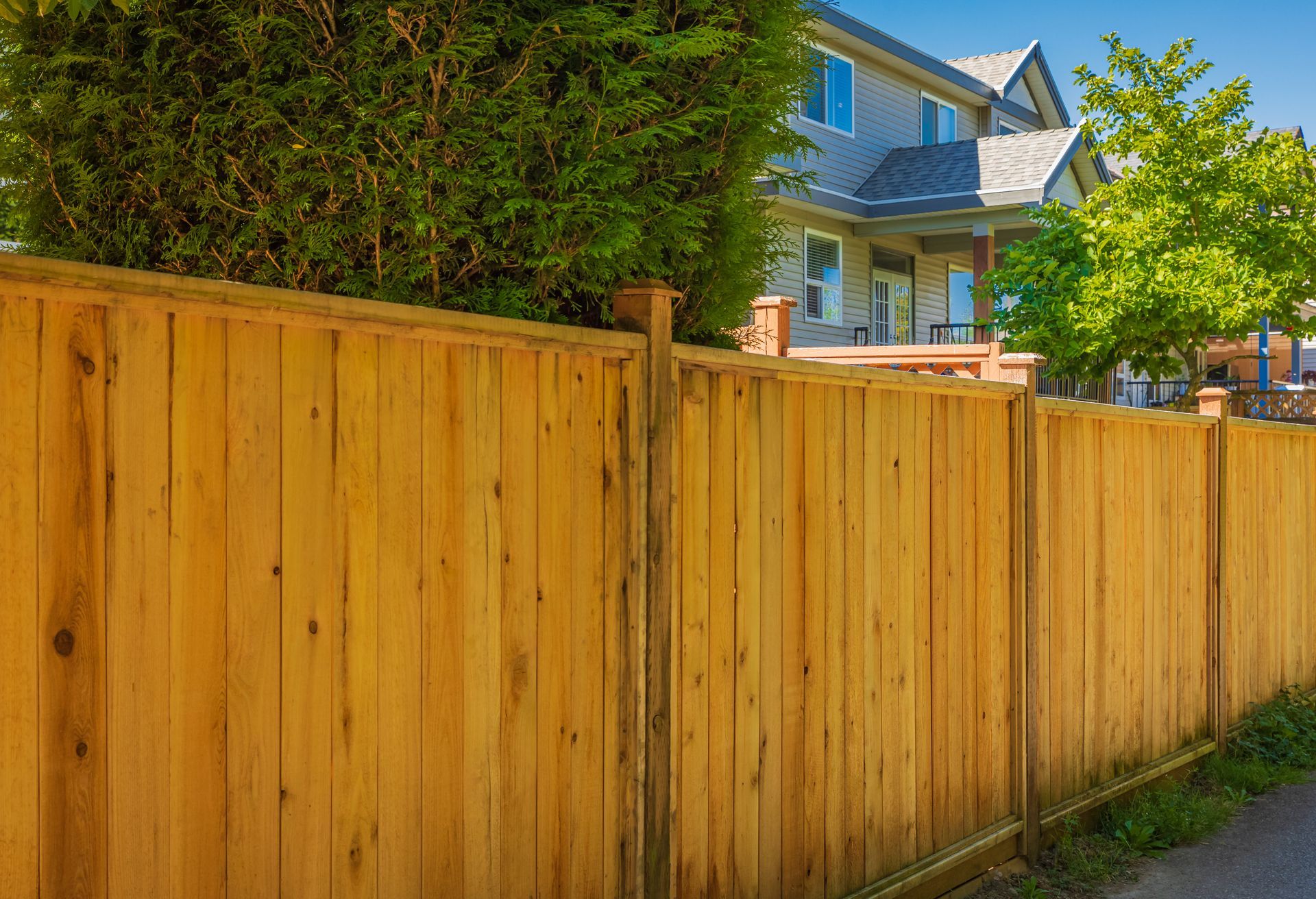
Gate posts, corners, and fence ends demand extra strength. For the most reliable wood fence installation, Sims Fence Company relies on the use of 4x6 terminal posts at all high-stress points. Standard 4x4 posts are perfectly adequate in straight fence runs, but terminating points require more stability to counteract the force of shifting red clay. Over the years, we’ve seen how 4x6 posts make a dramatic difference, keeping fences upright and strong even with repeated freeze-thaw and wet-dry soil cycles.
If you want your wood fencing installation to last, use the proper materials from day one. The small investment in oversized posts pays off with fewer repairs and a longer-lasting, straighter fence.
The Importance of Drainage in Wood Fencing Installation
No matter how deep or strong the posts, the battle against rot continues after the initial wood fence installation. Drainage is critical. Avoid piling soil, mulch, or landscaping material up against the base of your posts. Keeping the base uncovered ensures water drains away quickly.
Sims Fence Company routinely checks post holes before setting concrete, making sure no water accumulates and everything is compacted correctly. Healthy drainage means your wood fencing installation resists both rot and frost heave, which is common with heavy clay soils like those in Thomasville.
Material Choices: Pressure-Treated Wood and Staining
The materials you choose matter just as much as the installation methods. Our recommendation for any lasting wood fence installation is pressure-treated lumber. This wood resists the effects of standing water and insects, two hazards that Georgia red clay makes ever-present.
Equally important is periodic staining and sealing. By sealing your fence after proper installation, you keep moisture out and sunlight from causing damage. If you’d like to learn more about the different types of woods and coatings suitable for our area, explore our wood fencing installation services page.
Our Wood Fence Installation Process
Each wood fence installation project at Sims Fence Company starts with a personalized site assessment. We analyze your property’s unique lay of the land and soil conditions. By adapting our methods specifically for your site, we avoid the shortcuts that lead to leaning, rotting, or warping fences in the future.
We set every post to at least one-third its height, install thick drainage aggregate bottoms, and use 4x6 posts at every terminal. Throughout the process, our goal is to build a fence that endures Thomasville’s weather and soil. We take pride in every single wood fencing installation, backed by years of local expertise.
Maintenance After Wood Fence Installation
Ongoing upkeep is key for every wood fence installation. Walk your fence line twice a year to look for early signs of movement or rot. Keep grass and landscaping trimmed back from the base, and check that drainage remains clear around your posts. And reapply stain or sealant every few years to shield the wood from the elements.
With these habits, you extend the life of your original wood fencing installation and preserve its beauty and strength for years to come.
Why Sims Fence Company for Wood Fence Installation?
Operating in the Thomasville, GA area, Sims Fence Company brings decades of experience in tackling the challenges of red clay and local climate to every installation. We combine proven techniques with the best materials to ensure every wood fencing installation is both beautiful and resilient. From deep-set posts to enhanced drainage, our professionalism and local knowledge set us apart.
Ready for the Best Wood Fence Installation? Contact Us!
Don’t let a leaning fence embarrass you or waste your investment. We’re here to make sure your next wood fence installation stands strong, looks great, and lasts for years—even through Thomasville’s toughest seasons. Call Sims Fence Company at 229-245-9697 or visit our contact page to schedule a consultation or request your quote today. Our team is ready to answer your questions and build a fence you’ll be proud of!